
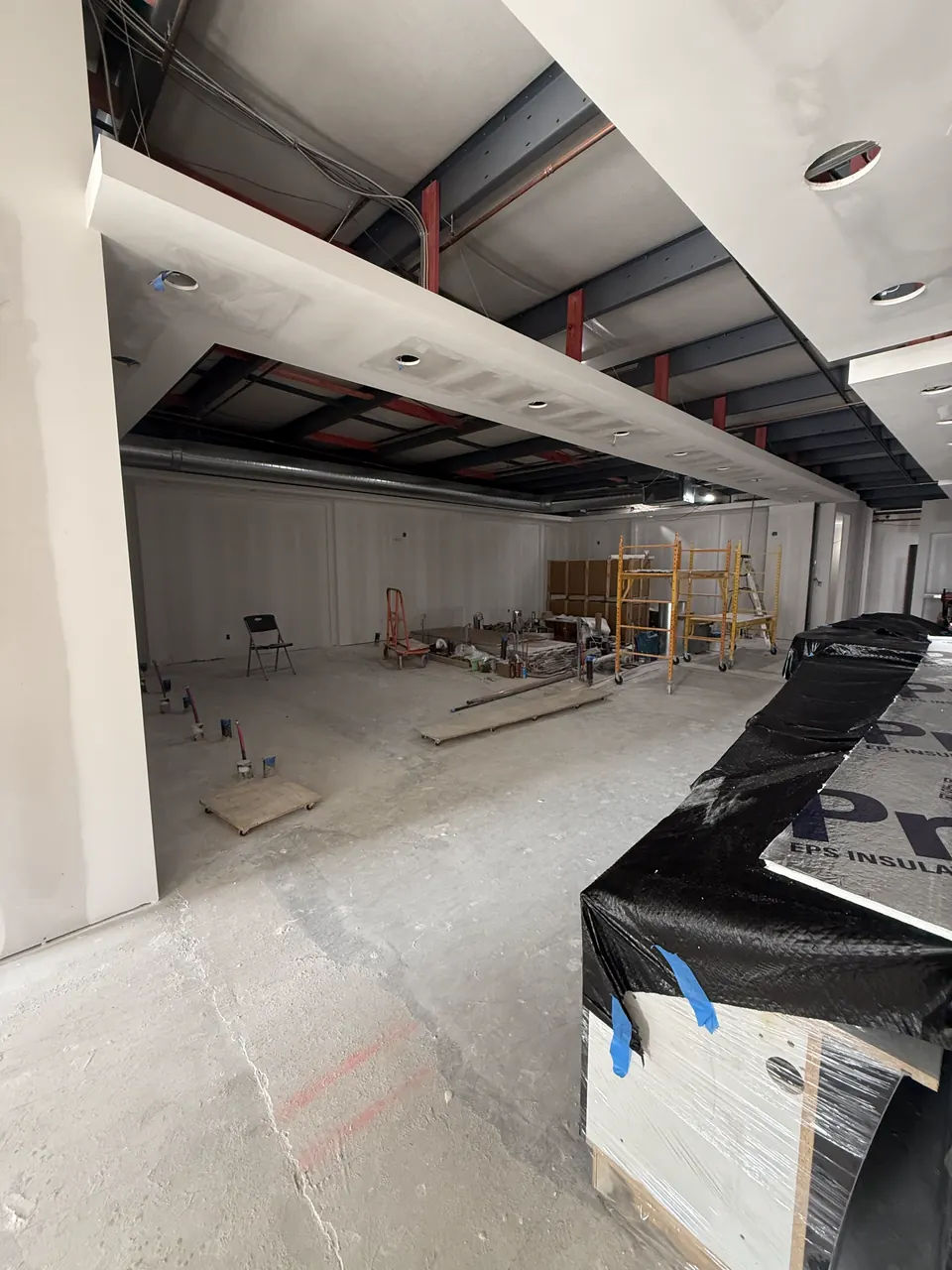
It is not a hunt for imperfections under any imaginable condition. It is a check against the agreed work, the selected finish and the room's intended use. Where a specification or contractual acceptance procedure applies, use that procedure rather than inventing a new standard at handover.
Agree on what is being reviewed
Is this a localized repair, a full-wall resurfacing or newly installed drywall? What finish level or texture was specified? Is priming included in the current stage or assigned to the painter? “Ready for paint” is too vague if each party means a different set of tasks.
Write the boundary before walking the room. A small patch may involve a larger painting area, but that does not mean a whole-wall skim coat was included. Likewise, a texture sample should be tied to the approved scope rather than remembered from a brief conversation.
Review the lighting that actually matters
The Gypsum Association explains why jobsite mock-ups help connect a specified finish to actual lighting and intended appearance. Surface expectations should therefore be discussed with the planned decoration and lighting—not in isolation. Gypsum Association finishing and mock-up guidance.
Record daylight conditions, installed fixtures and normal viewing positions. If a future wall-wash light or a different sheen is planned, disclose it now. A late design change may alter what is visible and what additional work needs to be priced.
Use one location-based issue log
| ID | Exact location | Observation | Required decision | Assigned owner | Status |
|---|---|---|---|---|---|
| W-01 | Example: office north wall | Visible ridge at agreed viewing position | Review against scope/sample | Drywall contractor | Open |
| W-02 | Example: hall repair | Paint boundary unclear | Agree spot vs. wall repaint | Owner/painter | Pending |
| Your item | ___ | ___ | ___ | ___ | ___ |
The examples are not findings from a Kaines project. Use observable descriptions in your own log. “Ridge at upper-left patch edge” is easier to act on than “wall looks wrong.” Pair a close photograph with a wider location photograph.
Keep three categories separate
Completion items are tasks already included but not yet finished. Appearance questions need comparison with the approved scope or sample. Changes are new requests, such as a broader repair boundary, different texture or new lighting expectation.
Putting everything into one undifferentiated punch list makes it harder to agree on responsibility and timing. Name the category, proposed action and who authorizes it. Do not treat an unresolved observation as an accusation or as automatic acceptance.
Set a hold point for decoration
Agree which open items must be resolved before the next coating stage. Confirm product readiness using the applicable material instructions; a calendar date alone does not prove a surface is ready. Keep later trades from damaging completed areas, and document new damage separately from the original repair.
After agreed corrections, revisit the listed locations under comparable conditions. Record completion and any remaining exclusions. Keep the log with the texture or finish sample reference so future maintenance has a clear starting point.
For Kaines drywall repair, this walkthrough connects the repaired surface to the next trade. Its value is a shared, specific handoff—not a guarantee that every wall will look identical under every light.